Why Mechatronics is in Great Demand?

In this 21st century, the global economy demands more and more polymaths. Research has shown that people with multiple interests and cross-disciplinary expertise are more likely to be successful. Even employers prefer techies with cross-disciplinary skills.


Hence Mechatronics Engineering which is a combination of different engineering subjects is a new generation course and has a huge potential to grow by leaps and bounds not only in India but also abroad. The aspirants who want to broaden their knowledge in the field of engineering can pursue this course and this course is very ideal for them.

It is hard to find a product in today’s world which is entirely electronic, electrical or mechanical in nature. This means that today’s product is a blend of different engineering subjects. Mechatronics Engineering is a blend of different engineering disciplines and so the demand for Mechatronics Engineers is growing day by day.

Mechatronics is already central to the modern global economy. According to a study by the National Instruments Corporation, machine manufacturers all over the world report having to build machines that are increasingly more complex, yet have less and less time to market those machines. In response to this pressure, most design companies and manufacturers are relying increasingly on mechatronics. According to the Aberdeen Group, a technology think-tank, the most successful companies are the ones that use mechatronics or similar collaborative processes.

Most of the engineering-oriented business and industrial sectors are now paying attention towards Mechatronics Engineering as it has several applications in these sectors. Not only large global enterprises but also smaller innovative companies are hiring Mechatronics Engineers as these industries are inclining towards advanced technologies more and more.


Graduates of Mechatronics Engineering can find employment opportunities in several industries such as Robotics, Nanotechnology, Automation, Aircraft Engineering, Oceanography, Oil and Gas, Biomedical Systems, Transport, and Computer-aided design. Mechatronics is very useful when it comes to automation of industrial tasks.

Mechatronics Engineers design, develop, maintain and manage engineering systems that have the cutting-edge sophisticated technology. Mechatronics Engineering professional plays a key role in areas such as design, research, and development, sales, production management, safety, and quality.


Today’s mechanical devices are composed of electrical, software and mechanical components. These kinds of devices are designed and manufactured by Mechatronics Engineer. Synonymously Mechatronic product is called the smart product, which is a result of the combination of three engineering disciplines namely Electrical, Electronics, Mechanical, and Computer Science & Software Engineering.
What is the workplace of a Mechatronics Engineer like?

Mechatronics engineers work in industries such as robotics, aerospace, medical and assistive technology, mining or defence, material handling, human-machine interaction, manufacturing, unmanned aerial and ground vehicles, and education. They may work in laboratories, high tech companies, large global enterprises, processing plants or engineering offices but can also be involved with research in emerging fields like bioengineering, nanotechnology and robotics.

Mechatronics engineers may be required to travel to present at a conference or view a new design idea or innovative technology.

Mechatronics Engineers are also known as:

  • Automation Engineer
  • Control System Engineer
  • Data Logging Engineer
  • Instrumentation Engineer
  • Controls Engineer
  • Development Engineer
  • Equipment Engineer

What Does a Mechatronics Engineer Do ?

Mechatronics engineers work in all aspects of the development of products, from design and testing right through to manufacture. There is almost no product in the world that is solely electronic, electrical or mechanical in nature. With the growing capabilities of electronics, modern mechanical systems are embedded with electronics and controls. This means that the lines between each discipline are becoming increasingly blurred, and there is a growing demand for mechatronics engineers whose knowledge is strong across all of these areas.

From consumer goods, such as microwaves, cars and smart phones, to industrial applications such as CNC machine tools, robots and MRI and X-Ray machines, mechatronics engineers use fundamental principles of electrical, mechanical, software, and control engineering in their design and development in order to generate a simpler, more economical and reliable way to do things.

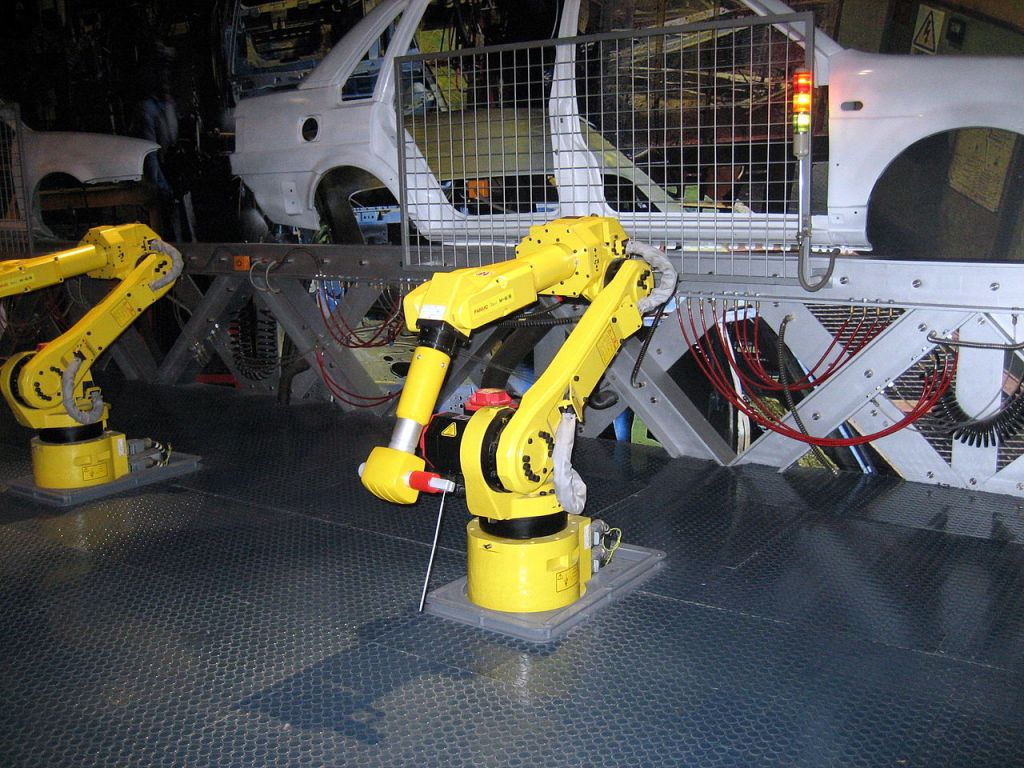
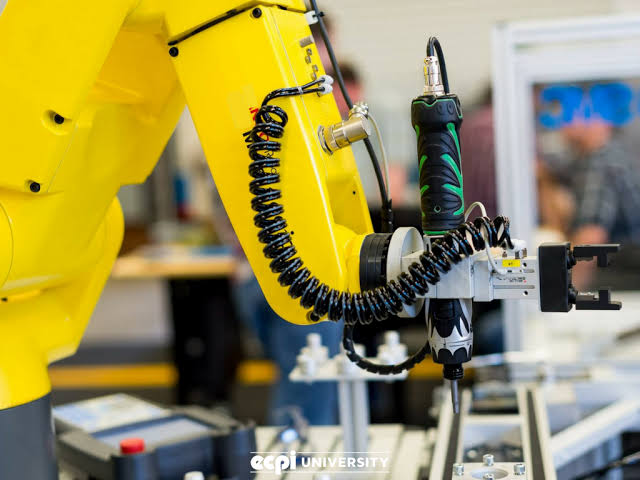
Mechatronics engineers create machines that are made up of several parts: the mechanical system, the sensing and actuation, the control systems and the software. An industrial robot is an excellent example of a mechatronics system; it includes aspects of electronics, mechanics, and computing to do its day-to-day job.

Some tasks mechatronics engineers undertake:

  • Develop solutions to industrial problems by using mechanical/electronic/computer technology
  • Design and build new products – for example, developing robotic vehicles for underwater exploration
  • Introduce automation to factory production lines to improve existing processes
  • Improve previous industrial/manufacturing processes – for example, robotic floor cleaners
  • Design and develop engineering systems for the automation of industrial tasks
  • Apply mechatronic solutions to the transfer of material, components or finished goods
  • Apply control systems which are typically computer-driven
  • Apply electronic/mechanical processes and computers to dangerous tasks in underwater exploration, mining or forestry
  • Study the feasibility of new mechatronic equipment
  • Carry out modelling and analysis of mechanical, electronic or other systems using computers

Physical Implementation of Mechatronics.

Mechanical modeling calls for modeling and simulating physical complex phenomena in the scope of a multi-scale and multi-physical approach. This implies to implement and to manage modeling and optimization methods and tools, which are integrated in a systemic approach. The specialty is aimed for students in mechanics who want to open their mind to systems engineering, and able to integrate different physics or technologies, as well as students in mechatronics who want to increase their knowledge in optimization and multidisciplinary simulation techniques. The specialty educates students in robust and/or optimized conception methods for structures or many technological systems, and to the main modeling and simulation tools used in R&D. Special courses are also proposed for original applications (multi-materials composites, innovating transducers and actuators, integrated systems, …) to prepare the students to the coming breakthrough in the domains covering the materials and the systems. For some mechatronic systems, the main issue is no longer how to implement a control system, but how to implement actuators. Within the mechatronic field, mainly two technologies are used to produce movement/motion.

Application of Mechatronics.

Mechatronics is one of the new and existing fields on the engineering landscape, subsuming parts of traditional engineering fields and requiring a broader approach to the design of system that we can formally call as Mechatronics system.

Many industries improving their works through automation which is based on the inter connection between the electronic control systems and mechanical engineering. Such control systems generally use microprocessors as controllers and have electrical sensors extracting information from mechanical inputs through electrical actuators to mechanical systems.

This can be considered to be application of computer based digital control techniques through electronic and electric interfaces to mechanical engineering problems. Successful design of Mechatronics can lead to products that are extremely attractive to customer in
quality cost-effectiveness.

  • Machine vision
  • Automation and robotics
  • Servo-mechanics
  • Sensing and control systems
  • Automotive engineering, automotive equipment in the design of subsystems such as anti-lock braking systems
  • Building automation / Home automation
  • Computer-machine controls, such as computer driven machines like CNC milling machines, CNC waterjets, and CNC plasma cutters
  • Expert systems
  • Industrial goods
  • Consumer products
  • Mechatronics systems
  • Medical mechatronics, medical imaging systems
  • Structural dynamic systems
  • Transportation and vehicular systems
  • Mechatronics as the new language of the automobile
  • Computer aided and integrated manufacturing systems
  • Computer-aided design
  • Engineering and manufacturing systems
  • Packaging
  • Microcontrollers / PLCs
  • Microprocessors

Description of Mechatronics.

A mechatronics engineer unites the principles of mechanics, electronics, and computing to generate a simpler, more economical and reliable system. The term “mechatronics” was coined by Tetsuro Mori, the senior engineer of the Japanese company Yaskawa in 1969. An industrial robot is a prime example of a mechatronics system; it includes aspects of electronics, mechanics, and computing to do its day-to-day jobs.

Engineering cybernetics deals with the question of control engineering of mechatronic systems. It is used to control or regulate such a system (see control theory). Through collaboration, the mechatronic modules perform the production goals and inherit flexible and agile manufacturing properties in the production scheme. Modern production equipment consists of mechatronic modules that are integrated according to a control architecture. The most known architectures involve hierarchy, polyarchy, heterarchy, and hybrid. The methods for achieving a technical effect are described by control algorithms, which might or might not utilize formal methods in their design. Hybrid systems important to mechatronics include production systems, synergy drives, planetary exploration rovers, automotive subsystems such as anti-lock braking systems and spin-assist, and everyday equipment such as autofocus cameras, video, hard disks, CD players and phones.

What is Mechatronics ?

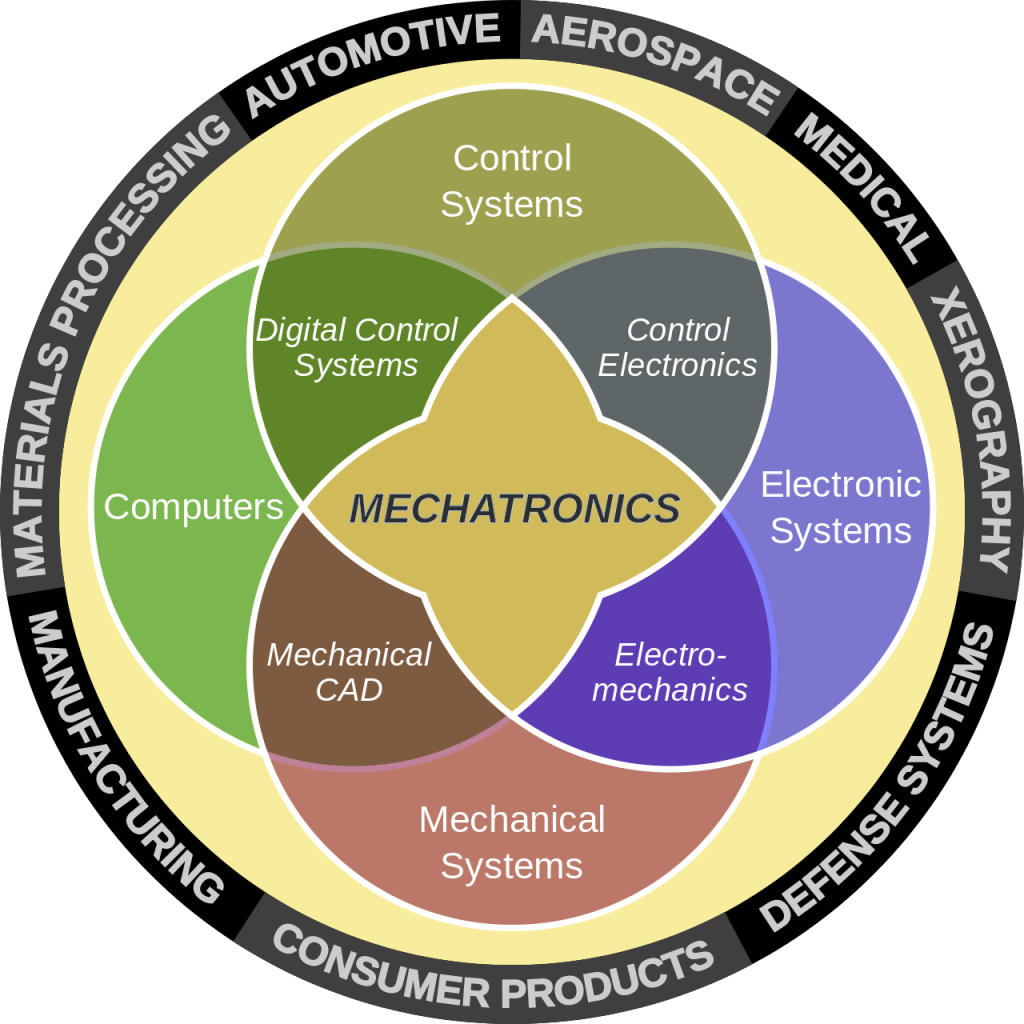
Mechatronics, also called mechatronics engineering, is an interdisciplinary branch of engineering that focuses on the integration of mechanical, electronic and electrical engineering systems, and also includes a combination of robotics, electronics, computer science, telecommunications, systems, control, and product engineering.

As technology advances over time, various subfields of engineering have succeeded in both adapting and multiplying. The intention of mechatronics is to produce a design solution that unifies each of these various subfields. Originally, the field of mechatronics was intended to be nothing more than a combination of mechanics and electronics, hence the name being a portmanteau of mechanics and electronics; however, as the complexity of technical systems continued to evolve, the definition had been broadened to include more technical areas.

The word mechatronics originated in Japanese-English and was created by Tetsuro Mori, an engineer of Yaskawa Electric Corporation. The word mechatronics was registered as trademark by the company in Japan with the registration number of “46-32714” in 1971. The company later released the right to use the word to the public, and the word began being used globally. Currently the word is translated into many languages and is considered an essential term for advanced automated industry.[3]

Many people treat mechatronics as a modern buzzword synonymous with automation, robotics and electromechanical engineering.

French standard NF E 01-010 gives the following definition: “approach aiming at the synergistic integration of mechanics, electronics, control theory, and computer science within product design and manufacturing, in order to improve and/or optimize its functionality”.

Mechatronic system